

Cummins ISX Turbo vs. Actuator Failure: How to Tell Which One Is Bad
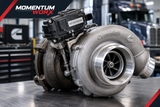
Is your Cummins ISX turbo failing, or is it just the VGT actuator? Here's how to tell the difference before spending thousands of dollars on unnecessary repairs.
When it comes to Cummins ISX engines, it's not a matter of if you'll eventually experience a turbocharger or actuator problem. It's a matter of when.
The frustrating part? A failing turbocharger and a failing VGT actuator can produce nearly identical symptoms.
How Does a Cummins ISX VGT Turbo Work?
Before diagnosing the problem, it helps to understand how the system operates.
Most Cummins ISX engines use a Variable Geometry Turbocharger (VGT), which adjusts the flow of exhaust gases through the turbine housing to control turbocharger performance. Unlike a conventional fixed-geometry turbocharger, a VGT uses movable vanes inside the turbine housing.
The actuator controls the position of these vanes based on commands from the engine's Electronic Control Module (ECM).
The system serves three primary purposes:
- Control boost pressure: Adjust turbine response and boost production based on engine operating conditions.
- Improve engine efficiency: Optimize turbocharger performance across different engine speeds and loads.
- Provide engine braking: Work alongside the engine's Jake Brake system to increase exhaust backpressure and improve braking performance.
Think about putting your thumb over the end of a garden hose. By restricting the opening, you increase the velocity of the water leaving the hose. A VGT turbocharger operates on a somewhat similar principle, adjusting the effective flow area through the turbine housing to change exhaust gas velocity and turbine response.
However, there's an important distinction:
Key distinction: The turbocharger produces boost. The actuator controls the VGT mechanism that influences how the turbocharger produces that boost.
If either component stops functioning correctly, engine performance can suffer.
Which Cummins ISX Engines Have VGT Turbos?
Not every Cummins ISX engine uses the same turbocharger and actuator arrangement. Here's a general breakdown of the major North American ISX engine platforms.
|
Engine Model |
Turbo Frame |
Actuator Type |
|---|---|---|
|
CM570 |
HX60 |
Pneumatic wastegate actuator (non-VGT) |
|
CM870 |
HE500V |
Pneumatic VGT actuator |
|
CM871 |
HE500VE |
Electronic VGT actuator |
|
CM2250 |
HE400VG |
Electronic VGT actuator |
|
CM2350 |
HE400VG |
Electronic VGT actuator |
|
CM2450 |
HE400VG |
Electronic VGT actuator |
Note: Turbocharger models and configurations can vary by application, horsepower rating, and engine serial number. Always verify the correct replacement parts using the engine serial number and turbocharger identification.
The CM570 is the notable exception because it uses a conventional turbocharger rather than the VGT systems found on later ISX platforms.
Beginning with the CM870, Cummins introduced variable geometry turbocharging, initially using pneumatic actuation before transitioning to electronically controlled actuators.
Important: The diagnostic procedure below primarily applies to electronically actuated VGT turbochargers. Pneumatic systems require different testing procedures.
Cummins ISX Turbo Failure vs. Actuator Failure: What Are the Symptoms?
Even an experienced diesel mechanic may have difficulty distinguishing between a failing turbocharger and a failing actuator based on symptoms alone. Both problems can cause similar drivability complaints.
|
Symptom |
Bad VGT Actuator |
Bad Turbocharger |
|---|---|---|
|
Low boost pressure |
Yes |
Yes |
|
Sluggish acceleration |
Yes |
Yes |
|
Check engine light |
Yes |
Yes |
|
Engine derate |
Possible |
Possible |
|
Excessive exhaust temperatures |
Possible |
Possible |
|
Unusual turbocharger noise |
Less common |
More common |
|
Excessive shaft play |
No |
Yes |
|
Oil leaking into intake or exhaust |
Not directly |
Possible |
|
VGT mechanism stuck or binding |
Not necessarily |
Yes |
These symptoms are useful clues, but they aren't definitive.
For example, a turbocharger that isn't producing sufficient boost might have a perfectly functioning actuator. The problem could be mechanical damage inside the turbocharger. Conversely, the turbocharger might be in excellent mechanical condition, but a failed electronic actuator prevents the vanes from moving into their commanded positions.
There are also problems unrelated to either component, including boost leaks, exhaust leaks, sensor failures, and wiring issues.
The key: Test the turbocharger and actuator independently before replacing parts.
How to Diagnose a Bad Cummins ISX VGT Turbo or Actuator
For electronically actuated VGT systems, there are two important things to check:
- Does the turbocharger's VGT mechanism move freely?
- Does the electronic actuator respond correctly to commands?
Testing these components separately can help determine whether you need a turbocharger, an actuator, or both.
Step 1: Check for Fault Codes
Before removing anything, connect a compatible diagnostic tool and check for active and inactive fault codes.
Cummins INSITE or another suitable diagnostic platform can help identify actuator communication problems, position errors, calibration failures, and other VGT-related issues.
Don't assume that an actuator-related fault code automatically means the actuator is defective. A mechanically stuck VGT mechanism can prevent a perfectly functional actuator from reaching its commanded position, resulting in an actuator-related fault. Likewise, a wiring or electrical problem can mimic a failed actuator.
Record the fault codes and follow the appropriate diagnostic procedures before removing components.
Step 2: Remove the VGT Actuator
Once you've ruled out obvious wiring and electrical issues, the next step is to inspect the mechanical operation of the turbocharger.
On applicable electronically actuated Holset VGT turbochargers, remove the actuator following the manufacturer's service procedure.
Important: VGT actuators require the appropriate installation and calibration procedure when installed or reinstalled. Depending on the system, this may involve actuator setup, gear alignment, and electronic calibration using Cummins INSITE or compatible diagnostic software. Never force the actuator into position or skip the required calibration procedure.
Step 3: Check the Turbocharger's VGT Mechanism
With the actuator removed, locate the VGT sector gear or control arm on the turbocharger. Carefully move the mechanism through its intended travel.
On many Holset VGT applications, reference marks on the turbocharger housing help identify the expected range of movement.
If the mechanism moves smoothly:
That's a good sign! It suggests the VGT mechanism isn't mechanically seized.
If the mechanism is difficult to move, binds, or won't move through its full range:
You likely have a mechanical problem inside the turbocharger. Common causes include carbon buildup, a damaged unison ring, worn internal components, or seized VGT vanes.
If the mechanism is mechanically stuck, a turbo replacement or rebuild is going to be in your future.
Step 4: Test the Electronic VGT Actuator
Next, evaluate the actuator independently using the appropriate diagnostic procedure for your specific engine and actuator. Depending on the system and available diagnostic software, this may involve a commanded position test, actuator self-test, or calibration routine.
If the actuator responds correctly:
The actuator may be functioning properly, making a mechanical turbocharger problem more likely.
If the actuator doesn't respond or fails testing:
The actuator itself may be defective. However, before condemning it, verify the wiring, power supply, ground, and communication circuits as applicable.
A failed actuator test doesn't always mean the actuator motor or electronics are bad.
Also, not every actuator supports unrestricted operation while removed from the turbocharger. Follow the manufacturer's specific testing procedure to avoid damaging the actuator or producing misleading results.
Step 5: Determine What Actually Needs Replacing
After testing both components, you should have a much better idea of what needs to be replaced.
|
Diagnostic Result |
Recommended Action |
|---|---|
|
Turbo VGT moves freely; actuator fails testing |
Investigate wiring, then replace actuator if confirmed faulty |
|
Turbo VGT is seized; actuator passes testing |
Replace or properly repair turbocharger |
|
Turbo VGT is seized; actuator also fails testing |
Both components may require replacement |
|
Both components pass testing |
Continue diagnosing sensors, wiring, leaks, and other engine systems |
Don't replace a $4,000+ turbocharger assembly when a standalone actuator could solve the problem.
On the other hand, don't install a brand-new actuator on a turbocharger with a seized VGT mechanism and expect it to last.
Frequently Asked Questions About Cummins ISX Turbo and Actuator Failures
My Cummins ISX VGT vanes are stuck. Can I clean them instead of replacing the turbo?
Sometimes.
Carbon and soot buildup can cause the VGT mechanism to become difficult to move or seize completely. In certain cases, properly disassembling and cleaning the affected components may restore operation.
However, this depends on the actual condition of the turbocharger. If the unison ring, vanes, or other internal components are physically worn or damaged, cleaning won't correct the problem. You may temporarily restore movement, but the underlying damage remains.
At that point, replacing the turbocharger is generally the better long-term solution.
Do I have to replace the turbo and actuator together?
No. The turbocharger and actuator can often be replaced independently.
If your turbocharger is mechanically sound and only the actuator has failed, replacing the actuator alone is a perfectly reasonable repair. In fact, that's often the most economical solution.
However, when replacing a high-mileage or failed turbocharger, we generally recommend considering a new actuator at the same time.
Why?
Because the actuator has likely experienced the same years of heat, vibration, and operation as the turbocharger. Installing an old, high-mileage actuator on a brand-new turbocharger can introduce another potential failure point.
That doesn't mean the actuator is automatically bad. It simply means replacing both components may provide better long-term reliability, depending on their condition and your budget.
How did my Cummins ISX turbo and actuator fail at the same time?
This is more common than you might think.
When the VGT mechanism becomes seized or excessively difficult to move, the actuator may continue attempting to position the vanes according to ECM commands. That places additional mechanical and electrical stress on the actuator.
Over time, this can contribute to actuator motor damage, gear damage, position errors, or other internal failures.
The result?
You now have a turbocharger with a seized VGT mechanism and an actuator that may also be damaged.
This is exactly why it's important to check the VGT mechanism before installing a replacement actuator. Otherwise, you risk damaging the new actuator without ever correcting the original problem.
Can I drive my Cummins ISX with a bad turbo or actuator?
That depends on how the turbocharger has failed.
If the VGT mechanism is stuck toward the open position:
The engine may struggle to build boost at lower RPM, resulting in sluggish acceleration and poor throttle response. Performance may improve somewhat at higher engine speeds, but the engine still won't operate as intended.
If the VGT mechanism is stuck toward the closed position:
The situation can be significantly more serious. Excessive exhaust restriction can create high exhaust backpressure, elevated exhaust gas temperatures, and potentially damaging turbocharger operating conditions. Continued operation can result in additional engine or turbocharger damage.
Depending on the fault, the ECM may also illuminate the check engine light, limit power, or initiate an engine derate.
Our recommendation: Don't continue operating a truck with a suspected seized VGT mechanism, abnormal exhaust temperatures, or signs of turbocharger mechanical failure. Have the problem properly diagnosed before it turns into a much more expensive repair.
Does a new Cummins ISX VGT actuator need to be calibrated?
Yes, electronically controlled VGT actuators generally require the correct setup and calibration procedure during installation.
This is not simply a matter of bolting on the actuator and driving away.
Depending on the engine and actuator design, calibration may involve setting the actuator's installation position, correctly engaging the actuator with the turbocharger mechanism, and completing an electronic calibration routine. Cummins INSITE or compatible diagnostic software is commonly used for these procedures.
Skipping calibration or installing the actuator incorrectly can cause immediate fault codes, improper VGT operation, and potential component damage. Always follow the specific installation instructions for your engine and actuator.
Buy Cummins ISX Turbochargers and VGT Actuators at Momentum Worx
Whether you've confirmed a failed VGT actuator, discovered a seized turbocharger, or are still trying to determine what's causing your Cummins ISX problems, Momentum Worx can help.
Located in Easton, Pennsylvania, Momentum Worx specializes in diesel turbochargers, actuators, and performance components for heavy-duty diesel engines.
We offer everything from genuine OEM Holset turbochargers and replacement VGT actuators to upgraded turbochargers, performance packages, and other diesel engine components.
We understand that not every truck needs an entire turbocharger assembly, and we're happy to help you identify the right parts for your repair.
Need a Cummins ISX turbo or actuator?
Contact the Momentum Worx team with your engine serial number, turbocharger part number, or actuator part number. We'll help you find the correct replacement and get your truck back on the road.
Recent Posts
-
Cummins ISX Turbo vs. Actuator Failure: How to Tell Which One Is Bad
Is your Cummins ISX turbo failing, or is it just the VGT actuator? Here's how to tell the difference …27th Oct 2026 -

CAT C15 / CAT 3406E | S430SX vs. S410SX Turbo— What You Need to Know
S430SX vs. S410SX — What You Need to Know If you're searching for an S430SX turbocharger, it's impor …18th Feb 2026 -

Best Detroit Series 60 N2 Injectors: Which One Should You Run?
Best Detroit Series 60 N2 Injectors: Which One Should You Run? If you’ve got a 12.7L Detroit Series …30th Jan 2026